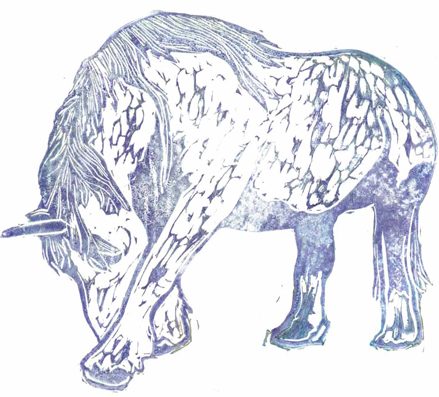
About the Course
2025 course registration is closed.
Click here if you would like to join my super-low-traffic email list to keep up-to-date about future classes and events.
This free 8 week course meets for two hours a week to work towards understanding disability from a social justice perspective. Disability is not a fixed concept; it has changed over time and is different depending on social and cultural context. We will work to understand “how disability” came to exist and why some people are included in the category and some are excluded.
The class is rooted in the principles that we live in a settler-colony and disabled people are a part of every oppressed group; therefore, justice for disabled people means decolonization and the elimination of oppression.
Students will read and discuss Disability Politics and Theory and some other readings and learn more about disability, disability justice and what it really means to work towards social justice.

Week 1: Introduction
We will meet each other, discuss how we will work together as a group, the book introduction and how we understand disability in within a settler-colonial context.
Read:
Chapter 1
Week 2: Eugenics
We will learn about eugenics past and present, including who is/was targeted and why.
We will discuss how eugenics has come to define disability and its relationship to white supremacy.
Read: Chapter 2
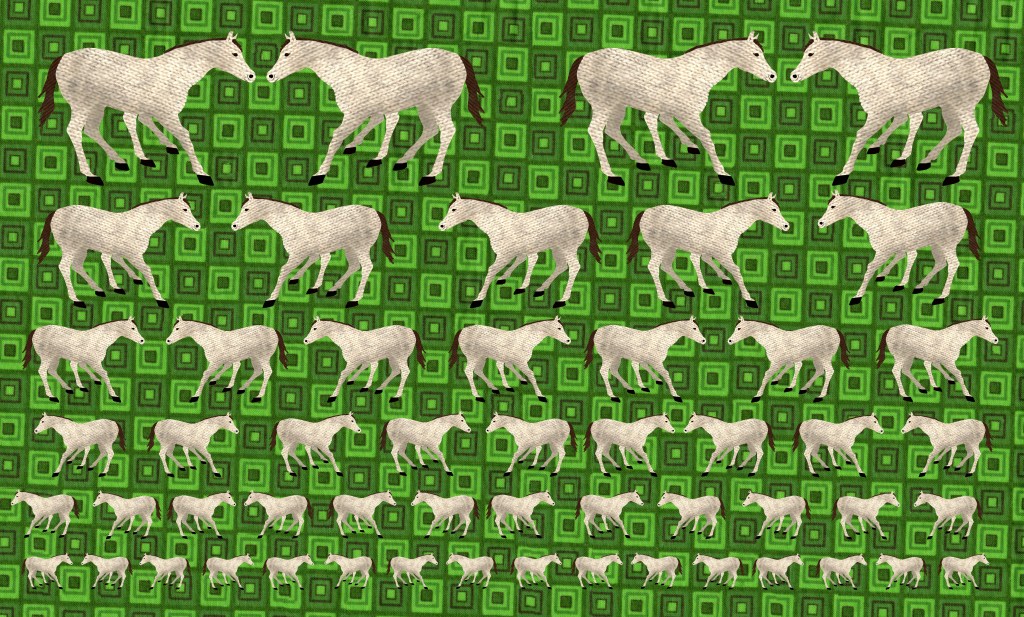
Watch: The Unicorn Eradication Project
Homework for week 3:
Maps aren’t just geographical. They represent things in relation to one another.
Draw (or describe) a map of the medical industrial complex and send it to AJ by 9am the morning of class day.
Examples of maps: Mapping Ruling Relations Through Homelessness Organizing pg 90, 106, 192, 245, 283.
Week 3: Medical Model
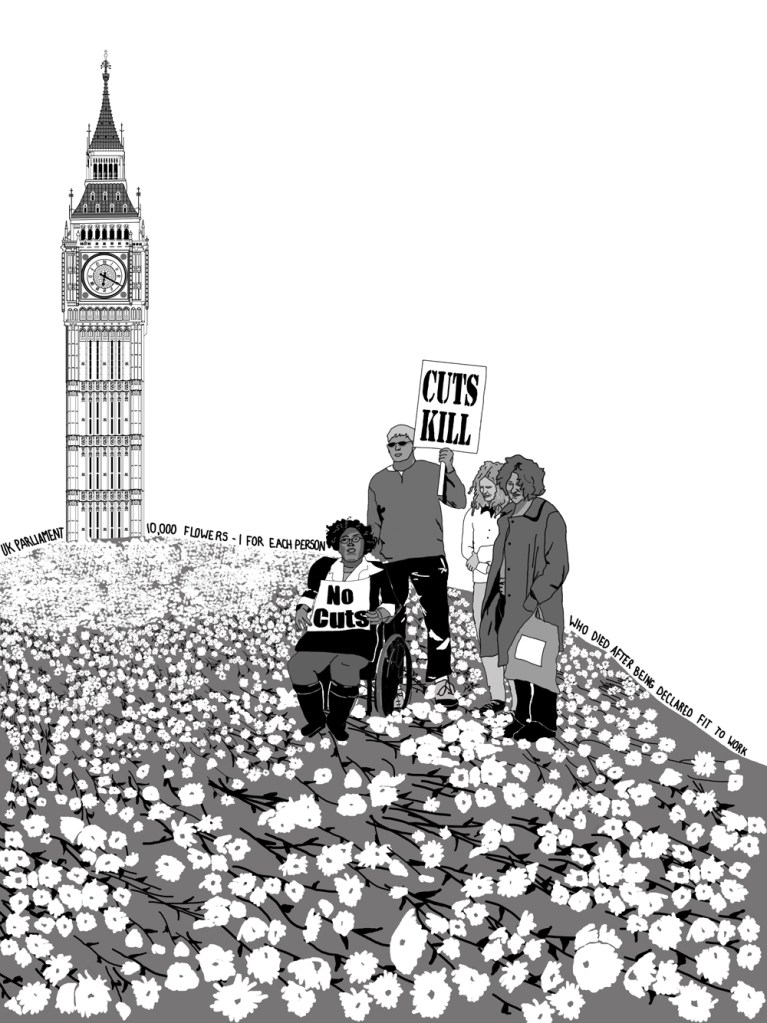
We will understand how disabled people’s lives are constrained and controlled through this model and discuss key concepts like the medical gaze, medical industrial complex, and quality of life.
Read: Chapter 3

Week 4: Rehabilitation
Understand what rehabilitation is, trouble it as an unproblematic good and discuss the “healing power of domination and imagined moral superiority” that runs through this model.
We will examine how rehabilitation, masculinity, whiteness and capitalist production became interlocked.
Read: Chapter 4
Optional: Audio Editing (extra hour of instruction)
Week 5: Charity
We will analyze how disability is depicted through this model, including visual depictions and the pitiful/supercrip divide.
We will discuss mutual aid and care collectives, their benefits and drawbacks.
Read:
Chapter 5
Young, Stella (3 July 2012).
“We’re not here for your inspiration”. Australian Broadcasting Corporation.
Charity Organization Society of the City of New York. Monthly Bulletin of the Charity Organization Society of the City of New York. New York: Charity Organization Society of the City of New York, no. 36, 1888. Read pg 3, look at p 5-8.

Week 6: Rights & Social Model
We will discuss the historic and contemporary contributions and limitations of rights and social model movements and approaches.
Read:
Chapter 6
Finkelstein, Vic. “The Social Model of Disability Repossessed.” Manchester Coalition of Disabled People, 2001.
Week 7: Radical & Justice
We will learn about this approach, what makes it different and what the 7 principles of the radical justice framework are.
We will examine how disability changes depending on the needs of power.
Read:
Chapter 7
Berne, Patricia, Aurora Levins Morales, David Langstaff, Sins Invalid. (2018). “Ten Principles of Disability Justice” WSQ: Women’s Studies Quarterly, 46 (1 & 2), 227-230.
Recommended:
Mingus, Mia. (2011). “Changing the Framework: Disability Justice.” Leaving Evidence.
Hariet Tubman Collective. (2016). “Disability Solidarity: Completing the ‘Vision for Black Lives.’” HuffPost.
Week 8: Disability Topics
Listen/watch party to review what each group has produced about their chosen disability topic.
Assignments
- Self-reflection: Write a 250-500 word reflection about what has changed about your understanding of disability since the start of the course and how that relates to your subject position.
- Self-reflection Peer Review: Provide thoughtful peer review feedback to at least 3 of your classmates on their reflections.
- Create a podcast/vodcast with your small group on a disability related topic.
- Choose a topic (housing, resistance, sexuality, transnationalism, policing, etc.)
- Produce a 10-30 minute podcast/vodcast for final week, including transcript
- Resources for how to do this will be provided – don’t worry.
FAQ
How do I register?
Registration for 2025 is closed.
When it opens again, there will be a form to fill out. Some people may not be suited to the course, which the form will indicate. You need to provide some basic information which will be used to create small groups, make the class accessible and get to know you. If there are too many students who wish to take the class, it will also be used to create a well rounded-class and set-up the waiting list.
Can I get university credit?
No. This is a community course and not offered through a college university.
Who is the course for?
Anyone who is concerned about social justice who wants to learn more about disability issues.
You do not have to have taken university classes or finished high school. You do need to be able to read/listen to a book that is designed to be accessible to a general audience.
Who is the course not for?
- People who teach disability studies or other courses on disability (invite me to talk to/join your reading group instead).
- People who are only taking the class for professional gain (i.e. to add it to your c.v. to be more employable/get a promotion).
Do I have to buy the book?
No. But, you have to read the book or listen to the audio-book/PDF. You can borrow it from a friend or get it from the library.
How much does it cost?
It is free.
Are the assignments marked/what happens if I don’t hand one in?
You are doing this course for your own learning. The assignments are not marked. You will get group feedback. If you don’t do them, you won’t benefit from this feedback to assist your learning.
Is it OK to miss classes?
Yes. Life happens. But, it is expected you will generally attend. If you know you can’t come to many classes, don’t sign-up for this session, sign-up for a future one.
Is it OK to miss the readings?
Sort of. It is expected you will have read the assigned texts. Sometimes this might not be possible. It happens. You should feel free to still come to class that week. However, class is designed for those who have done the reading so you should primarily sit back and listen that week.
I don’t know how do make videos/podcasts, can I still join?
Yes. Groups will be created to mix skill level and lots of resources will be provided. If needed, additional instruction will be provided on audio editing.
I don’t know very much about disability issues/social justice, should I still sign-up?
It is a class for you to learn. If you don’t know much about this, great!
Do I need my Zoom camera on?
Yes. For sighted instructors like me, it feels bad and is hard to assess where people are at or try to engage to a black screen. If you need to turn your camera off for a bit, that’s totally understandable. But, generally, you need to have it on.
